Trademark Registration India | Bharat Comply
Register your trademark in India with Bharat Comply. Expert trademark filing services to protect your brand. Apply online at affordable cost today.
Choose Your Package
Transparent pricing for Trademark Registration. No hidden charges.
Basic
Start today for ₹1,499. The government fee is billed only when we file your application.
- Trademark Filing
Government Fees (per class)
- Individual & Startup₹4,500
- Company and LLP₹9,000
Not sure which package fits your business?
Overview
- Trademark registration in India is the legal process of recording your brand name, logo, slogan, or other distinctive identifier with the Trade Marks Registry under the Trade Marks Act, 1999.
- Once registered, the trademark owner receives exclusive legal rights to use the mark for the specified goods or services and can take legal action against unauthorised or confusingly similar use by others.
- Trademarks can include words, logos, symbols, product packaging, taglines, colours, shapes, and even sound marks if they are capable of distinguishing one business from another.
Why Is Trademark Registration Important?
- Exclusive Brand Rights: A registered trademark gives businesses exclusive rights to use the brand name or logo in the registered class of goods or services across India.
- Legal Protection: Trademark registration allows businesses to take legal action against infringement and unauthorised use of similar marks.
- Business Asset and Brand Value: A trademark is an intellectual property asset that can be licensed, assigned, sold, or valued as part of a business transaction or investment process.
- Consumer Trust and Brand Identity: Registered trademarks strengthen brand identity and improve customer confidence in the authenticity and professionalism of the business.
- MSME Fee Benefits: Udyam-registered MSMEs and eligible startups receive concessional trademark filing fees under the Trade Marks Rules.
What Can Be Registered as a Trademark?
- Brand names and trade names
- Logos and symbols
- Slogans and taglines
- Product packaging and shapes
- Distinctive colour combinations
- Sound marks and certification marks
What Cannot Be Registered?
- Marks that are generic, descriptive, deceptive, confusingly similar to existing trademarks, contrary to public morality, or prohibited under law cannot generally be registered.
Understanding Trademark Classes
- India follows the Nice Classification system, which divides goods and services into 45 trademark classes. Trademark protection applies only to the specific classes selected in the application.
Common Trademark Classes
- Class 9: Software, mobile apps, electronics
- Class 25: Clothing and footwear
- Class 35: Advertising and business services
- Class 41: Education and entertainment services
- Class 42: Technology and SaaS services
- Class 43: Restaurants and food services
Trademark Registration Process in India
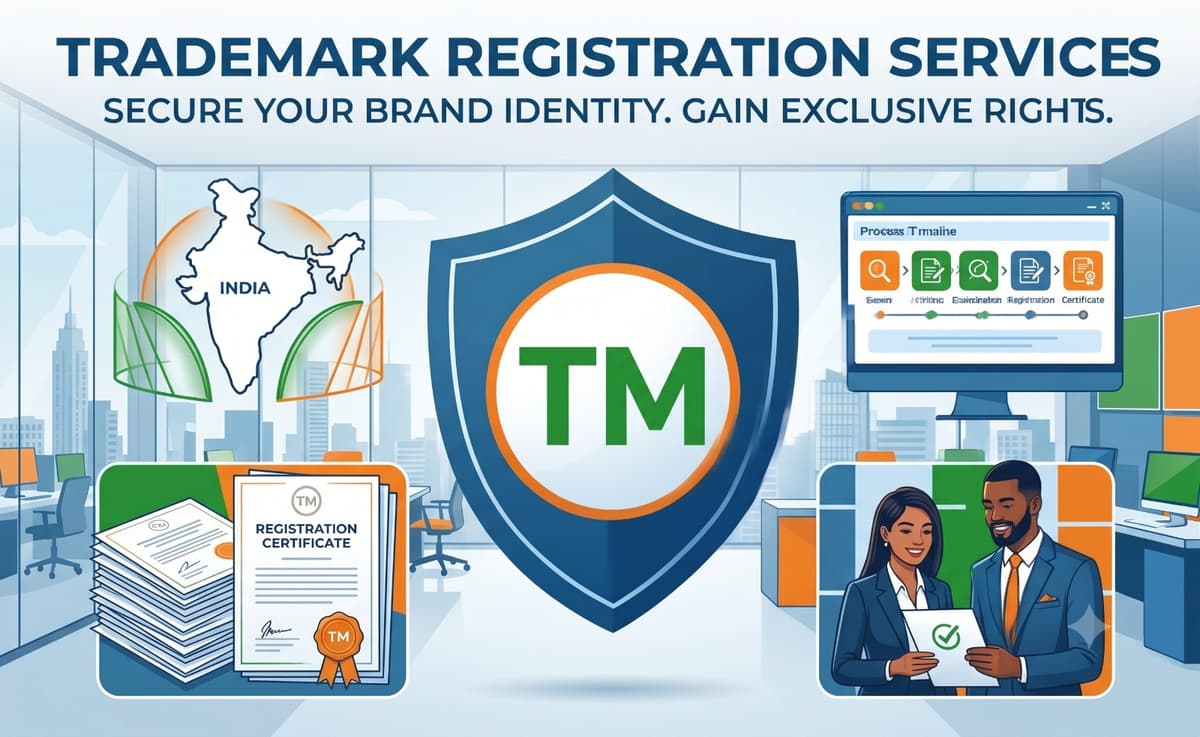
- Step 1: Trademark Search: A trademark search is conducted to identify existing or pending marks that may conflict with the proposed brand name or logo.
- Step 2: File Trademark Application: Form TM-A is filed online with details of the applicant, trademark, class, and goods or services covered.
- Step 3: Examination by Trademark Registry: The Trade Marks Registry examines the application for conflicts, descriptiveness, and legal eligibility.
- Step 4: Journal Publication: Accepted applications are published in the Trade Marks Journal for public opposition during the prescribed period.
- Step 5: Trademark Registration Certificate: If no opposition succeeds, the trademark is registered and the registration certificate is issued. Trademark registration remains valid for 10 years and can be renewed indefinitely.
Government Fees for Trademark Registration
- Startups, individuals, and MSMEs currently receive concessional government filing fees compared to larger entities. Fees are charged separately for each trademark class applied for.
- Individual & Startup: ₹4,500 per class
- Company and LLP: ₹9,000 per class
How Does Bharat Comply Support Trademark Registration?
- Comprehensive trademark availability search
- Trademark class identification and strategy
- Preparation and filing of TM-A application
- Handling examination objections and responses
- Trademark journal monitoring and updates
- Guidance on logo, brand, and IP protection strategy
Bharat Comply provides end-to-end trademark registration support to help businesses protect their brands legally and build long-term intellectual property value.
Key Benefits
Our Process
Conduct Trademark Availability Search
A detailed search is performed to identify conflicting or similar existing trademarks before filing the application.
Select Trademark Classes
The correct trademark classes are identified based on the products, services, and business activities covered by the brand.
Prepare and File TM-A Application
The trademark application is drafted and filed online with the Trade Marks Registry along with supporting details and documents.
Respond to Examination Objections
If objections are raised by the Trademark Examiner, professional responses and clarifications are prepared and submitted.
Monitor Journal Publication and Registration
The application is monitored through journal publication, opposition stages, and final issuance of the trademark registration certificate.